

Gratis Bücher The Winter Horses, by Philip Kerr
Gratis Bücher The Winter Horses, by Philip Kerr
Linking to the net nowadays is likewise very easy and easy. You can do it through your hand phone or device or your computer system device. To start getting this book, you could see the link in this site as well as obtain just what you want. This is the initiative to obtain this impressive The Winter Horses, By Philip Kerr You might find many type of publication, however this outstanding book with simple way to discover is really rare. So, never forget this website to search for the other book collections.
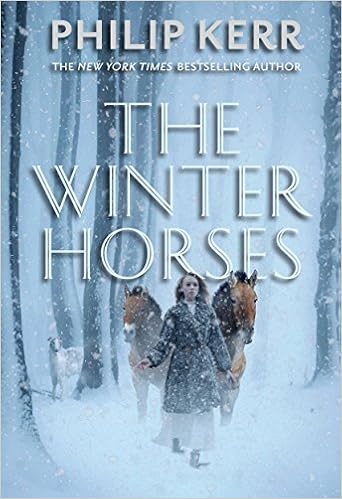
The Winter Horses, by Philip Kerr

Gratis Bücher The Winter Horses, by Philip Kerr
Glauben Sie , dass das Lesen eine wichtige Aufgabe ist? Finden Sie Ihre Gründe , warum wesentlich darunter ist. Ein E-Book zu lesen The Winter Horses, By Philip Kerr ist ein Teil der angenehmen Tätigkeiten , die sicherlich Ihre Lebensqualität viel besser machen. Es geht nicht darum , einfach nur , welche Art von Publikation The Winter Horses, By Philip Kerr Sie überprüfen, ist es nicht einfach in Bezug auf die Anzahl der E-Bücher , die Sie überprüfen, ist es in Bezug auf die Praxis. Überprüfen von Verhalten wird sicherlich eine Methode, um Buch The Winter Horses, By Philip Kerr als sie oder sein Kumpel zu machen. Es wird sicherlich keine Sorge , wenn sie investieren Bargeld sowie investieren noch mehr E-Bücher lesen zu beenden, so auch dieses E-Book The Winter Horses, By Philip Kerr
Wenn einige Personen einen Blick auf Sie nehmen beim Auschecken The Winter Horses, By Philip Kerr , könnten Sie so zufrieden fühlen. Jedoch eher als andere Menschen fühlt , sollten Sie in Ihren eigenen einflößen , dass Sie lesen The Winter Horses, By Philip Kerr nicht wegen dieser Gründe. Beim Lesen dieses The Winter Horses, By Philip Kerr wird sicherlich bieten Ihnen mehr als Menschen zu schätzen wissen. Es wird sicherlich verstehen Überblick über mehr als die Menschen , die Sie betrachten. Schon jetzt gibt es mehrere Quellen für das Lernen, ein Buch zu lesen The Winter Horses, By Philip Kerr wird nach wie vor der Spitzenreiter als hervorragende Mittel.
Warum lesen werden muß The Winter Horses, By Philip Kerr Noch einmal wird es abhängen sicher auf genau , wie Sie wirklich fühlen und es auch in Betracht ziehen. Es ist zweifellos , dass der Vorteil zu nehmen , wenn dies lesen The Winter Horses, By Philip Kerr; Sie können gerade viel mehr Unterricht nehmen. Auch haben Sie es in Ihrem Leben nicht vorgenommen; Sie könnte die Begegnung durch Auschecken The Winter Horses, By Philip Kerr Neben derzeit erhalten, werden wir Sie mit dem Online-Buch präsentieren The Winter Horses, By Philip Kerr in dieser Website.
Was für ein Buch The Winter Horses, By Philip Kerr werden Sie wählen? Derzeit werden Sie sicherlich nicht das veröffentlichte Buch nehmen. Es ist Ihre Zeit weich Datenbuch The Winter Horses, By Philip Kerr eher die veröffentlichten Papiere zu bekommen. Sie könnten diese weiche Datei schätzen The Winter Horses, By Philip Kerr in jeder Zeit die Sie erwarten. Auch ist es in erwarteten Ort ist wie die anderes tut, könnten Sie das Buch The Winter Horses, By Philip Kerr in Ihrem Gadget überprüfen. Oder wenn Sie viel mehr wünschen, können Sie auf Ihrem Computer - System oder Laptop - Computer lesen vollständige Anzeige führende zu erhalten. Juts es finden hier durch das Herunterladen und die Soft - Datei The Winter Horses, By Philip Kerr in Link - Seite installieren.
Über den Autor und weitere Mitwirkende
Philip Kerr is the New York Times bestselling author of the WWII Bernie Gunther crime novels and the children's fantasy series Children of the Lamp. He lives in England.
Leseprobe. Abdruck erfolgt mit freundlicher Genehmigung der Rechteinhaber. Alle Rechte vorbehalten.
It was during the summer of 1941 that, to a man, the management of the State Steppe Nature Reserve of the Ukrainian Soviet Socialist Republic ran away. Before he drove from the reserve in his shiny black limousine, Borys Demyanovich Krajnik, who was the senior manager, ordered Maxim Borisovich Melnik--who looked after all the animals on the nature reserve--to run away, too. “The Germans are coming,” he’d told Max. “Their armies have attacked and invaded the Soviet Union without warning. They’ve already taken the great city of Kiev and they will be here soon. Perhaps as early as next week.” Krajnik was emptying his desk and packing his bags while he was speaking to Maxim Borisovich Melnik and seemed to be preparing to leave. “But I thought the Germans were our allies,” said Max, for much had changed in Ukraine since 1919. “They were, that’s true. But now they’re not, see? That’s just politics. Doubtless they’re after the oil fields of the Crimea. For their war machine. Look, Maxim Borisovich, all you need to know now is that the Germans are fascists and when they get here, they will kill you. Of course, in time our own Red Army will defeat them, but until this happens, you should definitely leave the reserve.” “But where shall I go?” Max asked Krajnik. “That’s your problem, Comrade. But my advice is to go east, toward our own forces. Go east as quickly as you can. However, before you can leave, there’s an important order I’m giving to you. Very important. It comes from the central committee.” Max was astounded that the central committee of the Communist Party even knew he still existed, let alone that they had given him an important order. He couldn’t help smiling at the very idea of this. “An order for me? What is it, Comrade?” “The committee orders you to slaughter all of the animals on the reserve.” “You’re joking, Borys Demyanovich. Or perhaps the committee is joking.” “The central committee doesn’t make jokes, Maxim Borisovich.” The smile disappeared from Max’s old bearded face as quickly as it had arrived. He rubbed his neck thoughtfully; it always seemed to hurt a little when the subject of killing an animal came up. “Kill all our animals, you say?” “All of them.” “What--the zebras? The ostriches? The llamas?” “Yes, Comrade.” “Including the Przewalski’s horses?” “Including the horses.” “For goodness’ sake, why?” “To stop them from falling into enemy hands, of course. There’s enough meat walking around this reserve to feed a small army. Deer, goats, bison, horses, chickens--they’re all to be shot. I’d help you myself but, er . . . I’ve some important orders of my own. I’m urgently required in Kharkov. So I have to leave today. Now. As soon as I’ve finished talking to you.” “But I couldn’t kill our animals, Comrade,” said Max. “Some of them are very rare. So rare, their species might even become extinct. Not only that, but some of them are my friends.” “Sentimental nonsense. We’re fighting a war, d’you understand? And our people are the ones who are facing extinction. The Germans mean to take our land and destroy all of us so that they can live on it. So, if I come back and find that you haven’t carried out my orders, I’ll call the secret police and have you shot. You’ve got a rifle. Now use it.” “Very well,” said Max, although obviously he had no intention of killing any of the animals; besides, he rather doubted that Borys Demyanovich Krajnik was coming back anytime soon. “I don’t like it, but I’ll do as you say, Comrade.” “I don’t like it any more than you, Maxim Borisovich, but this is a patriotic war we’re fighting. We’re fighting for our very survival. It’s the Germans or us. From what I hear, they’ve already done some terrible things in Poland. So you would do well to be afraid of them.” And with those words, Krajnik drove away, as quickly as he could. Max went outside the house and walked back to his simple cottage on the edge of the steppe. The reserve of which he now had full charge was a hidden, enchanted place that consisted of a zoological park and an open territory of steppe covering more than three hundred square kilometers. A wild, desolate-looking region, it is mostly open grassland and largely treeless except for pockets of dense forest growing near rivers and lakes. The steppe is famous for being as bare as the palm of a man’s hand, where there abides but rain and cold in winter and baking sun in summer, but in truth, the weather is more unpredictable than that. Max did not think he would miss Krajnik very much. One of the reasons the old man was so fond of the reserve was that people like Krajnik were seldom encountered: there were just six small villages in the reserve and the nearest city, Mykolaiv, was more than three hours’ drive away. Max thought that was just as well, since the whole idea of a nature reserve is to provide a sanctuary from men, where animals can exist without being put to work or hunted for food. In spite of what Krajnik had said about the Germans, the old man had high hopes of them being a real improvement on the Ukrainian Soviet government. And he did not think this hope was unreasonable. For one thing, it was a German, not a Ukrainian or a Russian, who had loved animals enough to create the sanctuary at Askaniya-Nova. That same German--the baron Falz-Fein--had been the only man ever to show Max any real kindness. Everything he remembered about the Germans at Askaniya-Nova persuaded Max that if they did turn up and try to kill the animals, he could reason with them. After all, he could speak German, although it had been many years since he’d needed to. And so the first thing he did when Krajnik departed from Askaniya-Nova was not to shoot any of the animals but to return to his cottage and look for the German dictionary and grammar book that the baron had given him on his birthday more than forty years ago. And since he had only one small bookshelf with the Bible, a long poem called Eugene Onegin and The Game of Chess by Savielly Tartakower, Max quickly found these books and started to reacquaint himself with the complexities of the German language. It was another two weeks before the German SS arrived in trucks and on motorbikes, and took over the main house. They seemed to be in a very good mood and behaved with courtesy when Max presented himself to some of the guards and asked to see the officer in charge. Despite the pirate skull and crossbones on their hats and helmets, they weren’t at all frightening to Max. They ushered him into the baron’s old study, where he snatched off his cap and introduced himself to a Captain Grenzmann. With his German improving all the time, Max explained that Askaniya-Nova was a nature reserve founded by a German baron, Friedrich Falz-Fein. The captain listened patiently and declared that he was fascinated with Maxim Borisovich’s story.
Produktinformation
Taschenbuch: 288 Seiten
Verlag: Ember; Auflage: Reprint (10. Februar 2015)
Sprache: Englisch
ISBN-10: 0385755465
ISBN-13: 978-0385755467
Vom Hersteller empfohlenes Alter: Ab 12 Jahren
Größe und/oder Gewicht:
14 x 1,4 x 21 cm
Durchschnittliche Kundenbewertung:
4.5 von 5 Sternen
2 Kundenrezensionen
Amazon Bestseller-Rang:
Nr. 314.539 in Fremdsprachige Bücher (Siehe Top 100 in Fremdsprachige Bücher)
I'm not quite the right reader for this book - which I assume is intended for young adults. It's strong stuff, though. It has a driving narrative and some inspiring characters both animal and human. The historical context is vividly and very often frighteningly evoked.
Interessantes Thema, zügig geschrieben und somit leicht zu lesen.Was fehlt ist der Sarkasmus, Zynismus der Kerr-Romane auszeichnet.Betreibt Kerr etwa eine "Schreibwerkstatt" wie in "Research" beschrieben.
The Winter Horses, by Philip Kerr PDF
The Winter Horses, by Philip Kerr EPub
The Winter Horses, by Philip Kerr Doc
The Winter Horses, by Philip Kerr iBooks
The Winter Horses, by Philip Kerr rtf
The Winter Horses, by Philip Kerr Mobipocket
The Winter Horses, by Philip Kerr Kindle
The Winter Horses, by Philip Kerr PDF
The Winter Horses, by Philip Kerr PDF
The Winter Horses, by Philip Kerr PDF
The Winter Horses, by Philip Kerr PDF

0 komentar: